The story of the saint
According to local tradition, St. Eufemija was a young Christian woman martyred at Chalcedon (modern-day Istanbul) in 304 AD during the persecutions under the emperor Diocletian. Her body was placed in a marble sarcophagus, which was lost during the iconoclast troubles of the eighth century — and, the legend goes, drifted across the Adriatic and ran aground at Rovinj on the morning of 13 July 800.
The townspeople carried the sarcophagus up the hill to the church that then stood at the highest point. She has been Rovinj's patron saint ever since. Her feast day, 16 September, is the town's biggest festival — and the marble sarcophagus is still inside the church, behind the main altar, on the right.
The building you see today
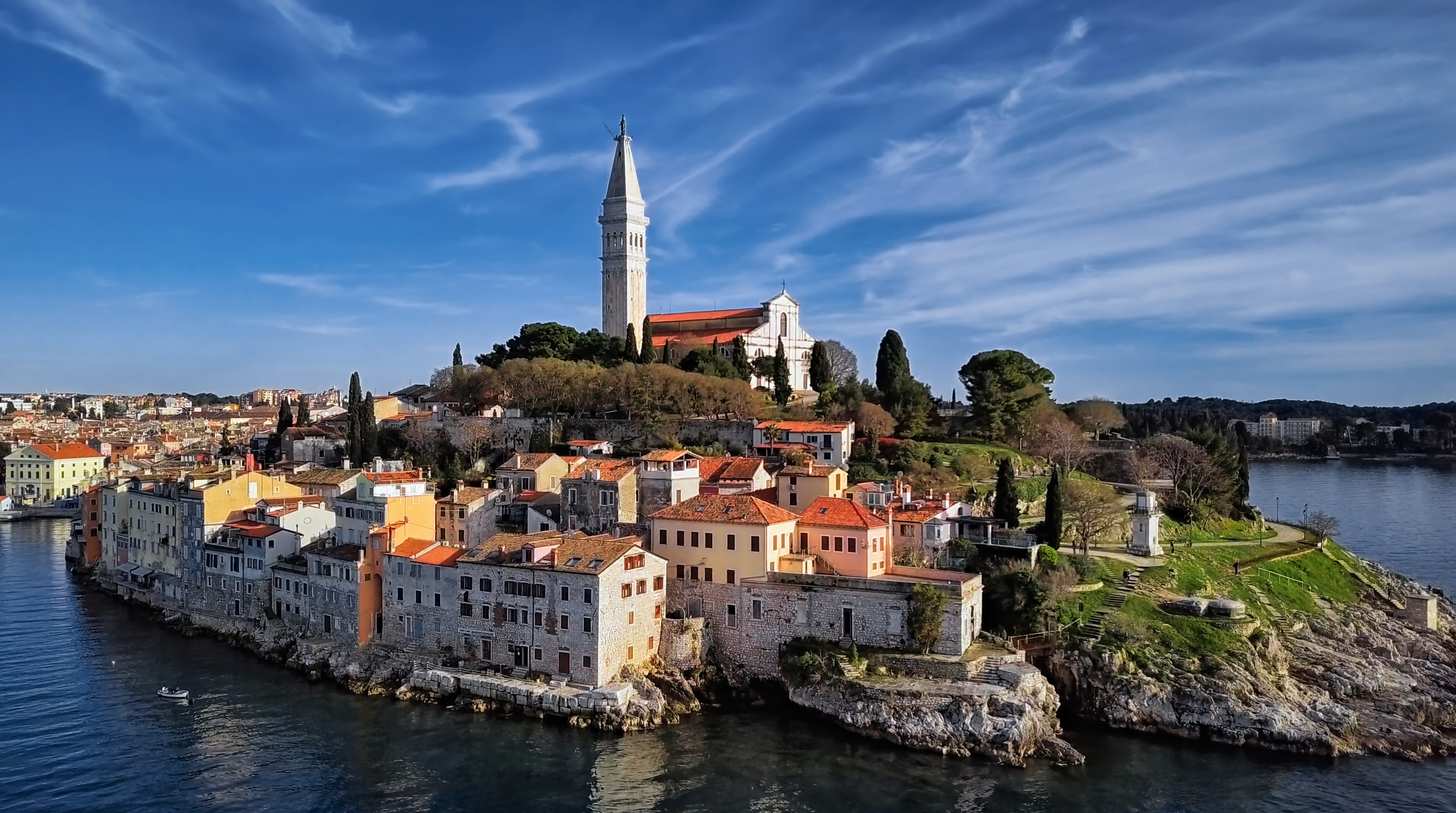
The earlier medieval church grew over the centuries; the current baroque building dates from 1725–1736 and was designed by the Venetian architect Giovanni Dozzi. Inside, the nave is wide and bright, with the saint's altar on the right and a series of side chapels along both walls. The acoustics are unusually generous — Sunday morning Mass is worth attending if only to hear the building come alive.
The bell tower
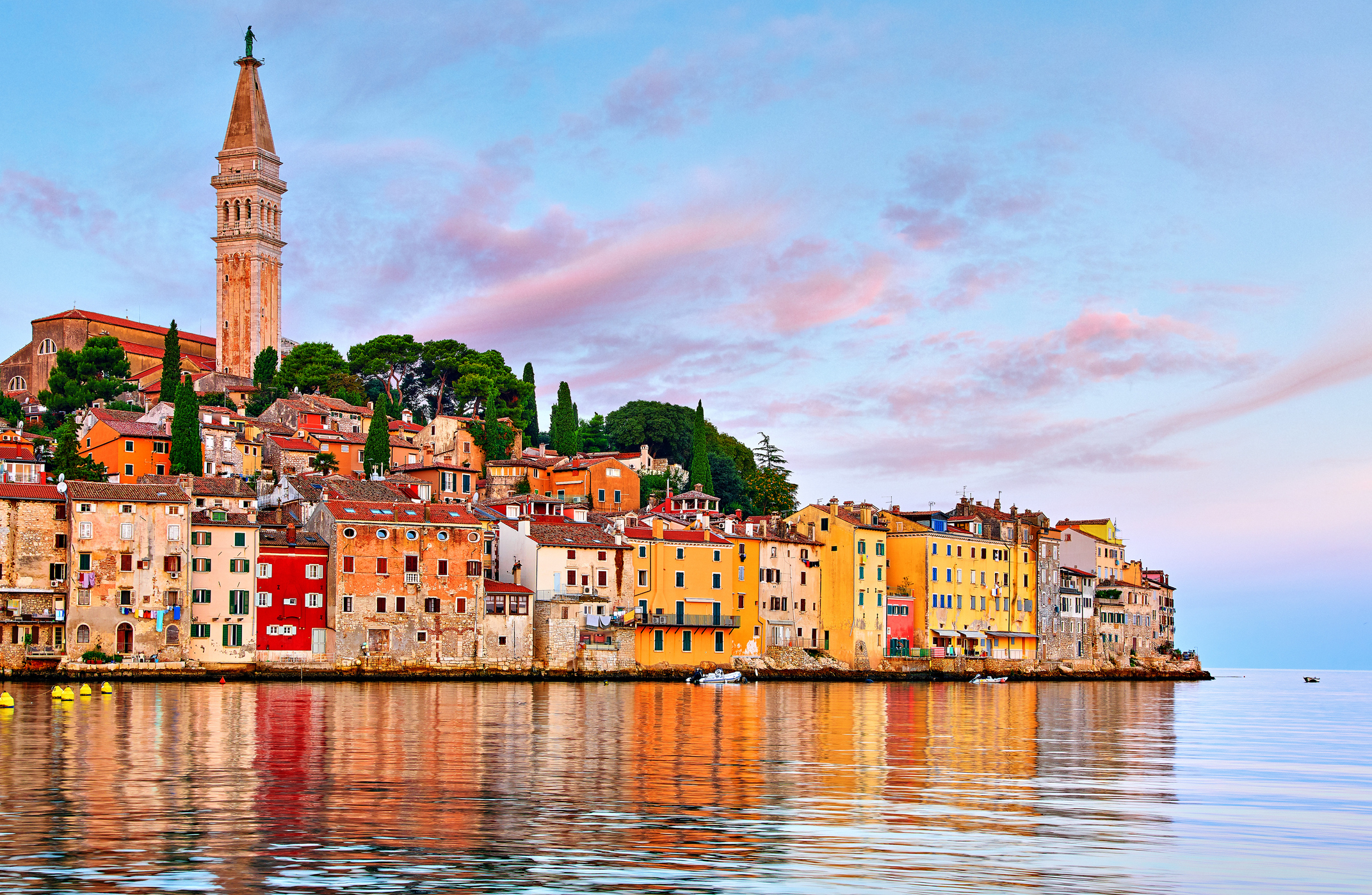
The campanile is the town's icon. It was built between 1654 and 1680, before the current church, and rises 60 metres. At the top stands a copper statue of St. Eufemija, weathered green, that pivots with the wind — locals use it as a weather vane. You can climb the tower for a small fee (a few euros, paid at the entrance). The wooden staircase is steep and the landings narrow, so allow your eyes to adjust at each level.
The view from the top is the one most photographs are taken from: the terracotta roofs falling toward the sea, the red-and-cream pattern of the Old Town, the harbour to the south, and on a clear day the islands of Sveti Andrija and Sveta Katarina out in the bay.