The shape of the place
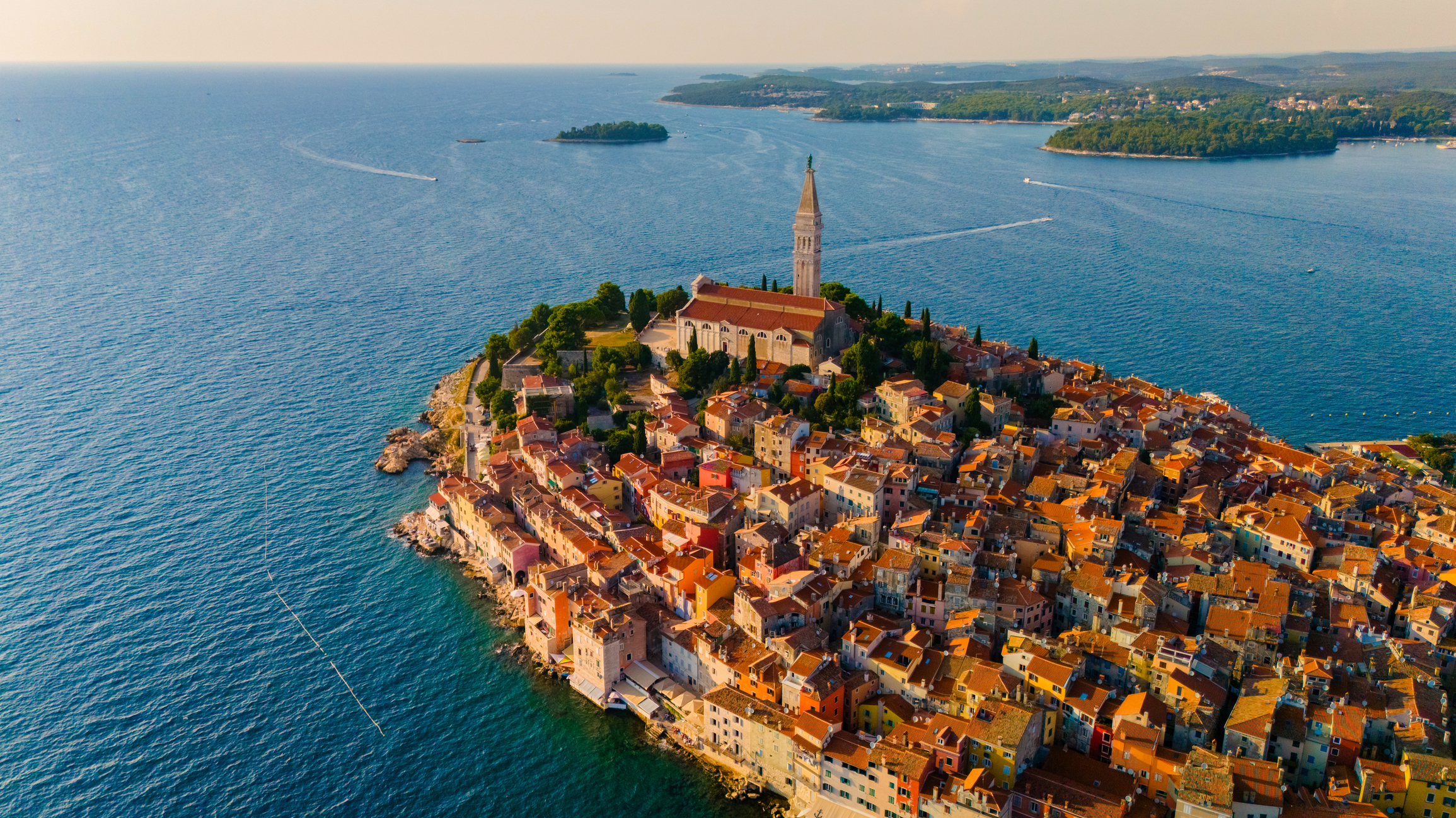
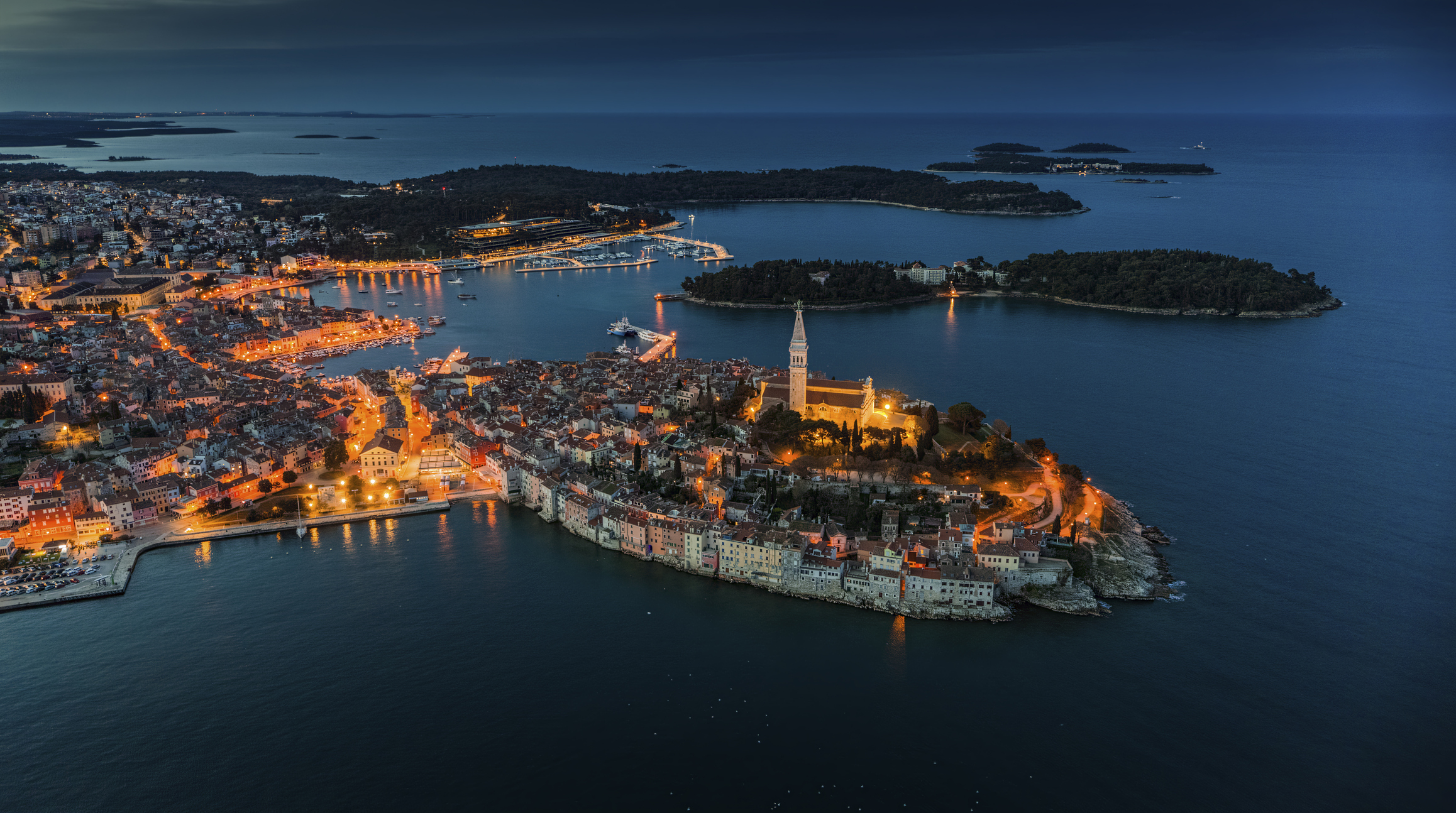
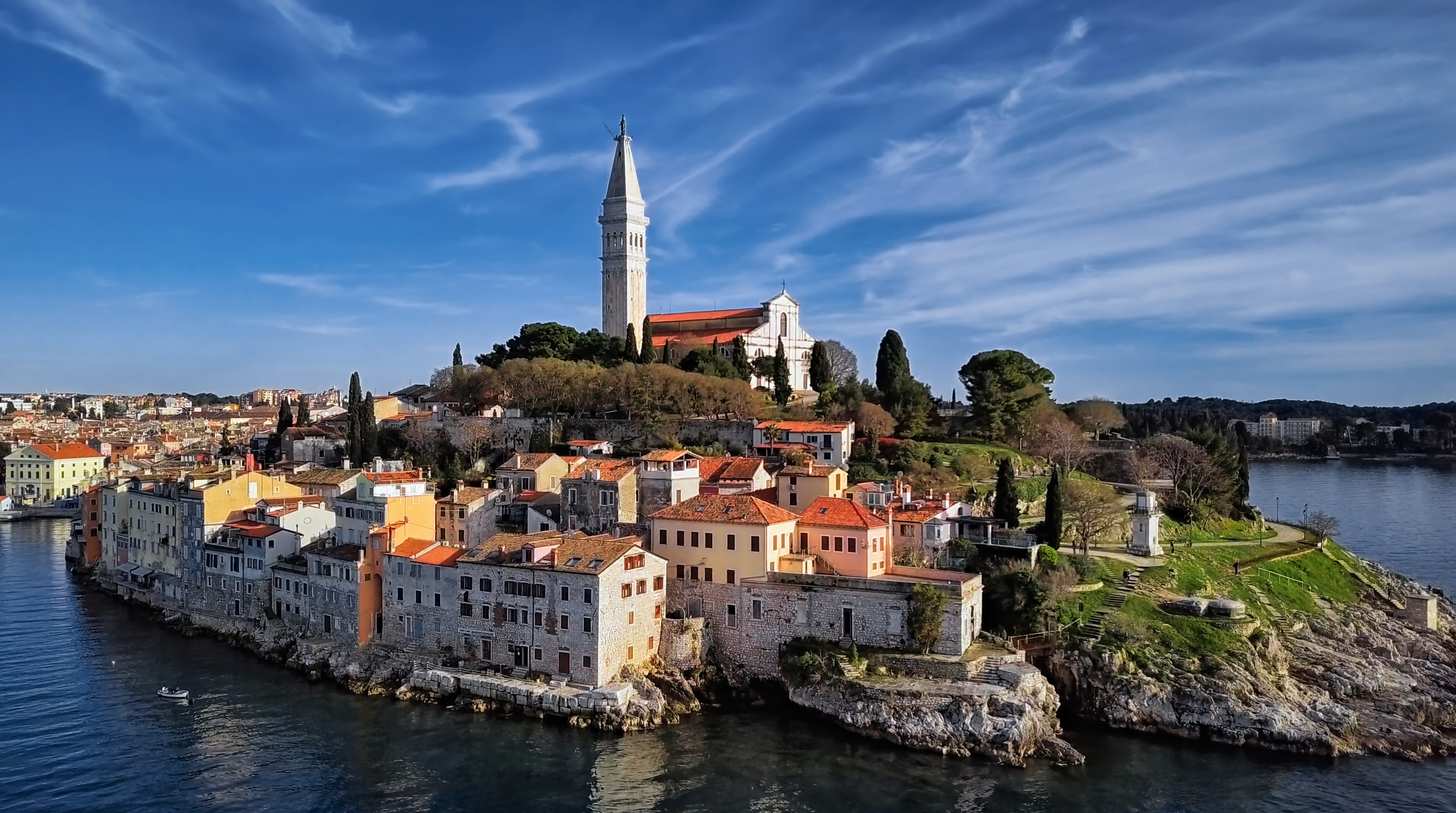
The Old Town is roughly oval, about 400 metres at its widest. The main entry from the modern town is at the Balbi Arch, a baroque gateway with a Venetian lion above. From the Arch, four roads run inland and upward: the route most visitors take climbs Grisia toward the cathedral.
There are three things to orient by:
- St. Eufemija, at the highest point. The bell tower is the visual anchor of the peninsula and visible from almost everywhere in town.
- Mali Mol and the harbour, on the southern side. The fishing boats moor here; the wooden batana boats are a local heritage.
- Baluota, at the foot of the Old Town's western edge. A flat-rock swimming spot with deep water — a staple for residents, tolerated by tourists.
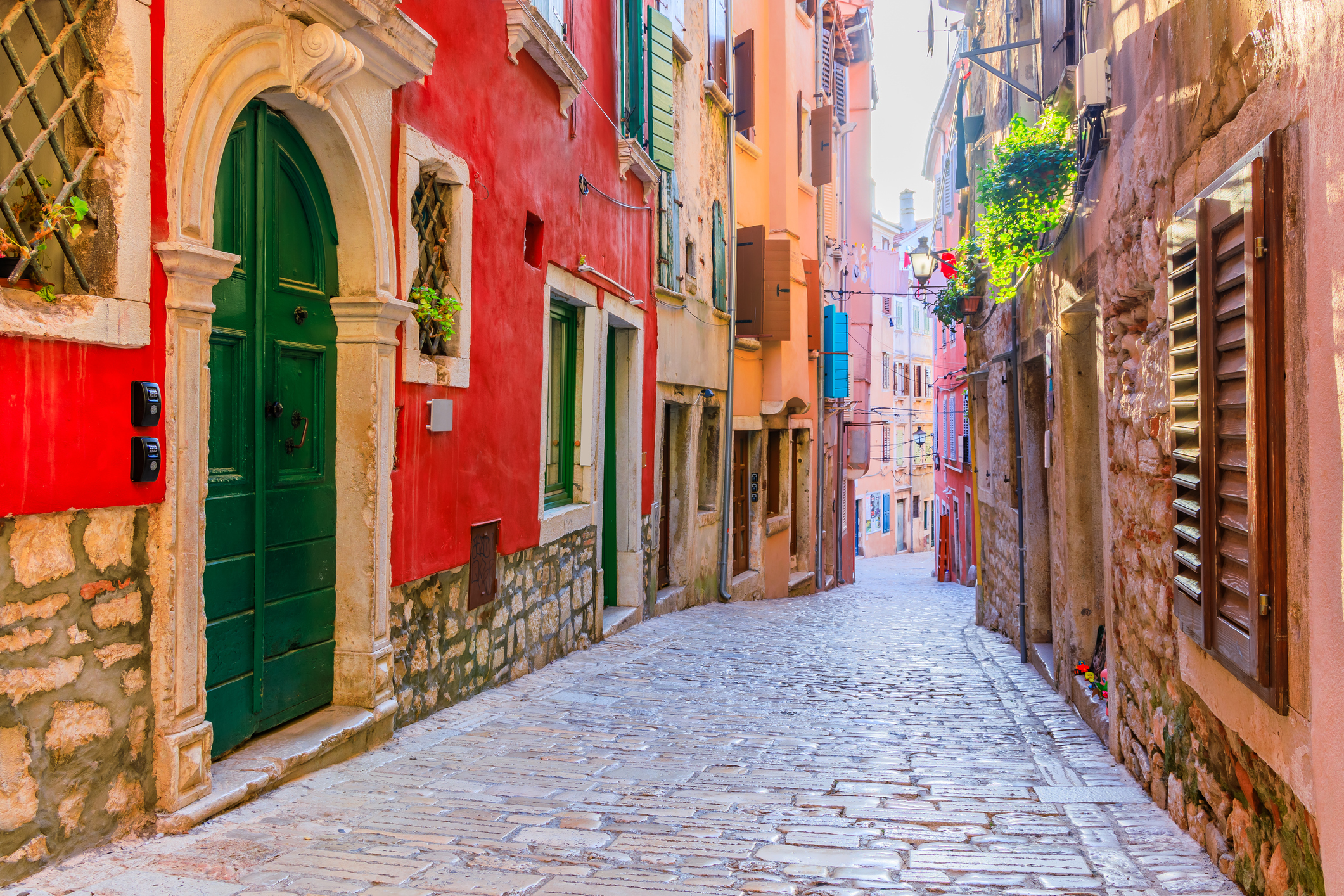
Grisia — the painters' street
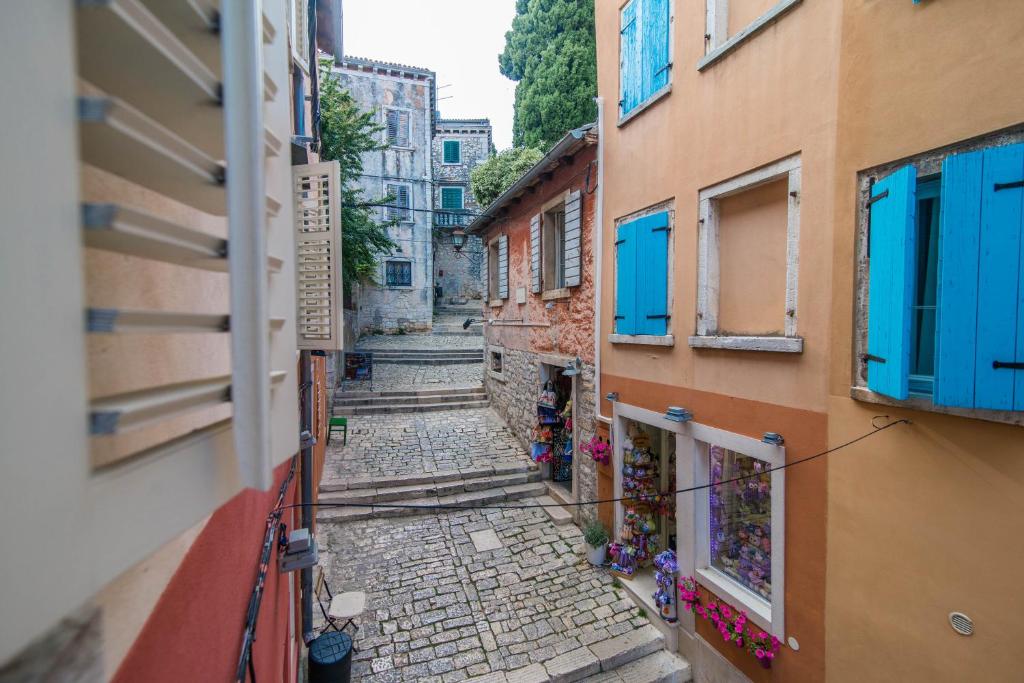
Grisia climbs from the seaward edge of the Old Town up to the cathedral square. It is the artists' street: every August, since the 1960s, the Grisia Open-Air Art Exhibition turns the entire street into an outdoor gallery — anyone can hang work, locals and visitors alike. For the rest of the year, small studios open along the lower stretch — paintings, prints, ceramics, jewellery. Some are commercial, some are working studios where you'll see the artist at the easel.
Walk it slowly. The light changes through the day; the upper section, in the late afternoon, has the kind of warm reflected glow that put Rovinj on the post-card map.
The lower town
Below the cathedral, the Old Town ravels into a network of narrow streets — kale in the local Venetian dialect — that lead back toward the harbour. Carera, the longer street running parallel to the modern town, is the main commercial spine: cafés, gelaterias, a few good independent shops. Off Carera, the side alleys hold the better restaurants — Tipico, Škabelin, Ulika, Sergio's pizzeria — most within a few metres of each other.
The waterfront
The southern waterfront, from Mali Mol round to Baluota, is the easiest evening walk in town. Pull-up benches, a few bars set into the rock, and the sun drops directly over the water from spring through autumn. The Casa della Batana ecomuseum, in a small stone building on the front, is worth twenty minutes — it documents the wooden flat-bottomed fishing boats unique to Rovinj.
A first afternoon, suggested
If you have one afternoon to find your feet:
- Enter through the Balbi Arch.
- Walk up Grisia to the cathedral square. Stop at the studios that catch your eye.
- Visit the inside of St. Eufemija (free; voluntary donation).
- Pay the small fee to climb the bell tower — best view in town.
- Come down via Sv. Križ on the eastern flank; the street drops back to the harbour.
- Sit on the front for a glass of malvazija (local Istrian white) before dinner.
Total walking time, with stops: about two and a half hours.